Tuesday, April 24, 2012

Training tips for the St. Luke's Half Marathon


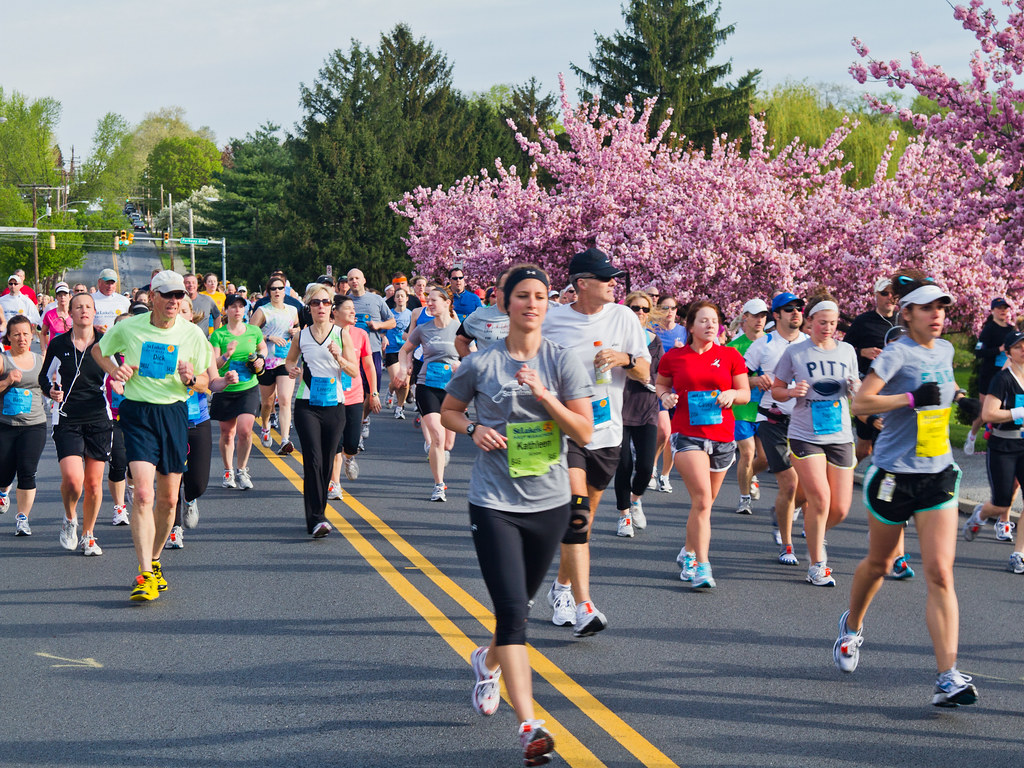
This weekend is the St. Luke's Half Marathon. If you're participating, hopefully you've trained well and are in the best shape of your life. Good Luck!
st lukes half marathon runners, may 1, 2011
St Luke's Half Marathon, 2011
For everyone else, let's go over the basics of training for a Half Marathon and some things to remember for the day of the race.

Training Diet

First of all, don't make an amateur mistake. Years ago, runners thought that 'carbing up" before a race meant eating piza or pasta, but that can be disastrous. Loading your GI tract with heavy foods like that will slow you down during the race and you'll probably run out of gas before the halfway mark. You might also experience some GI discomfort which will be intensely uncomfortable when your body is in overdrive.
It's true that your muscles need carbs before a race, but get them in the days leading up to the race, not directly before. Two days before the race start loading up on sports drinks and fruit juices and avoid any alcohol. Also avoid high fiber foods like beans and broccoli during this time and fatty foods like peanut butter and fried foods. On the day of the race, don't eat any solid food for 3 hours before the race, but drink lots of water. The ideal breakfast? A bagel and fruit juice. After the race, replenish your body's energy stores as soon as possible with light, healthy foods and more water.

Training for the marathon

If you've been sitting on the couch for the past year, I'm happy that you've made the decision to run. However, don't do too much too quickly. You really should start your training 12 months before the race. If you're in better-than-couch-potato shape, but not great shape, you should start about 26 weeks before race day.
Running doesn't only involve the legs, it involves your entire body, especially your cardiovascular system. It's wise to include more than just running in your training regimen. Olympic Gold medalist Rod Dixon recommends "strength training as part of marathon training or for that matter any running program... So often we rely on the power of the legs to get us through but there are so many ways we can get our whole body to share in the workload, and this means getting stronger. I'm a huge believer in cross training using our own body weight in exercise... I also highly recommend yoga for runners."
One key to an endurance race is finding your stride, one you can maintain the entire race. Overstriding leads to quick burnout and understriding means you'll finish in the back of the pack.
Former Olympic sprinter Samantha Clayton says that you can find your perfect stride length by focusing on your arm movement. "Run at 70 percent of your maximum speed with your arms bent at a 90-degree angle, driving them back and forth to a full range of motion. Over-reach your arms and watch your stride length increase; limit your arms' range and your stride shortens." Your perfect stride is somewhere in between. 
Correctly fitted athletic shoes are a must. They'll offer proper support for your arches and ankles, will absorb the hard surface impact and keep you from experiencing fatigue early on. Proper athletic shoes are best bought at a store that specializes in footwear for athletes. On the day of the race, wear double layered athletic socks to avoid blisters.
During your training routine, don't go for broke. Slowly increase your mileage and intensity until you're up to the half marathon distance a few weeks before the race. Don't forget to take days off from your routine, because resting is just as important as training, as it allows your muscles and cardiovascular system to recover and strengthen.
If you live in an urban area, train in the early morning when air pollution is at its lightest.
As a preventative measure, ice your shins or any other potential problem areas in your legs, ankles or feet for about ten minutes after a long run. Do this routinely, even if you aren't experiencing pain, as icing reduces any minor inflammation that may have set in without you being aware of it.
And lastly, the best runners "clear the chute before they commute".  Drink as much coffee as necessary a few hours before the event. I'm sure you get my drift. Your body will be working hard during the marathon and you don't want to have to hunt for a bathroom during the competition.
Here's an excellent half marathon training schedule from Shape magazine and a novice training schedule from author and runner Hal Higdon.

Monday, April 16, 2012

Activating Children - Part II

Kids playing in a lake at a church campKids playing in a lake at a church camp (Photo credit: Wikipedia)Hope you all caught Part I, and if you’re back for Part II, let’s take a moment and thank you for making a sound and important decision in the development and well-being of your children.  Their futures are very much in your hands and they need strong and steady guidance. What better way than to lead by example.

So you’ve made the decision to kick it in gear and you want to take off on a little run. Let’s make sure you have the things you might need. These items can fit in a child’s back pack, and yes, the child can carry it.

• Small first aid kit (be prepared)

• Cell phone

• Bottled water (everyone carries their own) or have a route planned where you know water is available

• Submit a plan by letting someone know where you are going and when you will be returning

Check everyone’s shoes. Make sure there is adequate arch support and cushioning and the fit is appropriate. These are two things that can lead to foot and ankle pain and now that you are in motion, you don’t want to slow down. You have your destination in mind now, but one more important preliminary:

Never start out running without first doing some warm up activities like stretching. You just can’t take the muscles from cold to hot without first advising the muscles what to expect. That’s what the warm up is all about. Allow yourselves a good five minutes to stretch and warm up by doing the following:

    •    Start with feet and point toes/point heels
    •    Rotate ankles both directions
    •    Stretch out legs
    •    Flex calf muscles
    •    Stretch out upper leg muscles
    •    Gently twist torso side to side
    •    Bend over and touch toes (do not bounce)
    •    A few arm rotations in small circles and giant circles
    •    Head circles and side to sides

On your mark, get set, go! But not too fast, remember, you are working into this slowly. When you’re done running, stretch again to cool down and walk it off. Now wasn’t that exhilarating?

Dr. Teichman has expert advice for you about your feet and ankles. You can have healthy feet for the rest of your life. If you have any unexplained foot or ankle pain, call (610)432-9593, or visit us at http://eastpennfoot.com/.  See you on the jog path!
Enhanced by Zemanta

Monday, April 2, 2012

Activating Children

Paques01Paques01 (Photo credit: Wikipedia)Are your kids cooped up all week, bound by the constraints of a typical working family? Come the weekend are you just so glad to have some downtime for yourself you might forget that they need outside diversions? Ok, no more excuses. The better weather has arrived and it is past time to get the kids off the sofa, away from video games and head for the outdoors. Your family activities do not have to cost a lot, nor do they require an all day time investment.

One of the things that a family can do together is run. There may need to be a little pace adjustment for the small ones, or a stroller may be required for the tiny tots. Beg one, borrow one or ask to be gifted with one and then hit the paths. Everyone will enjoy this family outing and the fresh air. If you have trouble motivating yourself go to this website and see how they break it down in tiny easy to accomplish steps. Your kids will love you for it.

No denying it childhood obesity is skyrocketing. This means earlier onset of foot and ankle problems due to the added stress and weight bearing on the young undeveloped bones of children. Don’t allow your child to suffer a lifetime of pain and aggravation when the solution lies right at your feet. Kids won’t make this decision by themselves. They need a leader who will set an example.

Benefits of an exercise plan include:

    •    Structured family time

    •    Build strong bones and muscles

    •    Mental attitude adjustment

    •    Burning excess energy

    •    More mentally focused when they need to be

    •    A foundation for healthy lifestyle

    •    Building family memories

No doubt about it, at first a change in lifestyle may come with some mild inconveniences, but overcome them now and set your kids up for success later in life. Build the strong feet and ankles necessary to carry them through life. Start your running program slowly and build gradually. This is not a 0 to sixty program your first time out. If you have foot or ankle concerns before you begin, consult with Dr. Teichman. His expertise can guide you on a conditioning plan and get you focused on the next step. Call (610) 432-9593 for an appointment.
Enhanced by Zemanta

Monday, March 26, 2012

Hey, I could really use a Little Support

Podiatrist treating footPodiatrist treating foot (Photo credit: Wikipedia)Do you suffer pain in the arch of your foot? Knee pain? Lower back pain? Have you raced off to the pharmacy to purchase the latest in arch supports from the foot department, only to come up short in the desired results department? What is real arch support and how does it help us?

Arch supports are inserts (off the shelf) or orthotics (prescribed by your podiatrist) that fit the arch of your foot to lend it support and prevent the stretching and small tears in the plantar fascia.  The plantar fascia is the ligament that runs the length of the foot. When stressed, this area becomes painful and inflamed. The most discomfort is apparent in the morning after a night’s rest. The ligament has contracted, and the first few steps in the morning can be painful as the ligament eases.

You are most apt to experience pain if you:

    •    Are overweight

    •    Spend long periods of time running walking or standing on hard surfaces

    •    If your feet roll inward

    •    Your calf muscles and tendons are too tight

How can you regain some comfort without breaking the bank? Consider a few things you can do at home to ease the pain.

    •    Ice the area for 20 minutes in the morning. If you have one of these neat rolling pins that allows you to put ice water in it. Put that under the arch of your foot and roll it back and forth. If not, do an application of cold first, then do the same type of rolling exercise using a rubber ball or tennis ball.

    •    Rise up on toes as far as possible, hold for 5 seconds, and lower. Repeat 10 times on each foot.

    •    Place the ball of your foot on wall at hip height. Lean forward until you feel the stretch in your foot, but do not cause added pain. Hold stretch for 5 seconds, release and repeat 10 times on each foot.

You can try arch supports from your pharmacy, but they may not always be reliable. The combination of the exercises and arch support may be enough to give you relief, but if not, call Dr. Teichman for an appointment. Get the kind of support you really need.

References:
http://www.livestrong.com/article/335195-exercises-for-sore-feet/
http://www.footminders.com/arch-pain-treatment-foot-arch-pain-with-orthotic-insoles.html
Enhanced by Zemanta

Monday, March 5, 2012

Barefoot Running - Fad or Friction

English: Friction Blisters on Human foot due t...Image via WikipediaAre you a runner? Does your day lack something if you can’t start the morning with that outing that really gets your blood pumping?  Well, how do you feel about this barefoot running trend?  Of course barefoot means without shoes. Then there is minimalist running which is running with “barely there” shoes. Barefoot running might be great in some instances, but here in the real world, seldom can you hand pick your surfaces each day to include soft grassy fields. More often, you see runners pounding the concrete. Without shoes, you would be increasing, immeasurably, the chance of puncture wounds, lacerations and infections. It’s sad to think about a runner being sidelined by an injury that could have so easily been prevented by wearing shoes.  But this just scratches the surface, so to speak.  What does barefoot running mean as far as support and impact to your tissues, muscles, joints and bones?

Barefoot running has become a hot debate, and there are probably arguments that can be made for running both with and without shoes, but in order for an argument to have validity, it needs to be backed by research.  Although there are people who have been running barefoot for years, have the studies really been performed and the results carefully analyzed in scientifically controlled experiments, or are people just exercising their right to preference? It will certainly be interesting to find out what the next ten years holds for this trend.  It seems that if it were truly beneficial, everyone would be running without shoes on.  Some people say that they just like the way it feels free, allowing the air to move across their feet. Similar arguments are used by motorcycle riders who refuse to wear helmets.  But there can be no denying that the use of helmets undoubtedly prevents injuries and probably saves lives.

One other point for consideration here, although it may be growing in popularity, it might not be right for you. Talk to your podiatrist and get their expert opinion on the matter, especially if you already have a foot problem that you are dealing with. You would not want to contribute to an existing problem.  If you are in need of a podiatrist, check out Dr. Teichman at East Penn Foot & Ankle Associates.

Do you have an experience or a story that you would like to share with us that involves barefoot running?  Please feel free to comment below, we would love to hear from you!

Enhanced by Zemanta

Thursday, February 16, 2012

Training for a Marathon Part #4

English: A child sleeping Deutsch: Schlafendes...Image via WikipediaFor the last two months, the main focus of this blog has been training for a marathon.  In the first blog, we talked about the equipment that is vital in run training.  The second blog focused on what exactly goes into a marathon workout.  How far a person should push themselves week after week.  Then the third blog discussed the diet of a marathoner.  This blog I’d like to focus on one thing: days off.

Days off, or rest days, are just as vital to a runner as training days are.  We touched on this subject a little bit in the Training for a Marathon Part #2, but it needs to be discussed further. 

Think about it, if you’re constantly pushing a car to press on, eventually, something is going to give.  If you constantly run a car, it’s very possible that something is going to break.  You need to let the engine and all the parts cool down.  The same thing applies to us as people.  If a person constantly pushes themselves, never allowing themselves to cool down and rest, something is going to break, which results in an injury.

One thing you need to listen to is your own body.  Pain is your bodies way of telling you something is wrong.  Yes we all have little pains that we ignore, but when there is a constant pain, something is wrong or broken.  The other thing that can happen if you don’t allow your body rest days is that you will probably become sick.  Again, constantly pushing your body day after day eventually leads to something going wrong, and when your body is tired and worn down, so is it’s ability to protect against illnesses.  If your body can’t protect itself, then you can expect a cold or flu right around the corner.  The interesting thing is that when your get an injury or get sick, you are forced to rest to heal.  Kind of ironic.

If you have any questions on foot or ankle injuries, contact East Penn Foot & Ankle Associates.
Enhanced by Zemanta

Thursday, January 19, 2012

Training for a Marathon Part #3

A diet rich in soy and whey protein, found in ...Image via WikipediaHopefully you have read part one and part two on training for a marathon.  So now, as you start training for your marathon, another thing you need to plan out is your diet.  If you have run for a while, you probably know what works for you and what doesn’t.  As you train, you need to listen to your body and note when you are running better and when you’re bogged down.  The key is probably your diet!

Pretty much every runner knows that carbohydrates are what they need to have the energy they need for running.  More than half of your diet should consist of carbs, which are foods that are rich in starch.  This means eat up on pasta, bread, and cereals.  One thing you’ll want to watch out for is those starchy foods that have a higher fat content to them.  So try for multigrain bread instead of cinnamon rolls, or shredded wheat instead of highly sweet cereals.  You want to get energy to run, but don’t want extra fats and sugars that will just bog you down. 

You also need to make sure that you are getting protein to build muscle.  This is important if you haven’t worked out in a while and are just starting off.  As you train, you’re body will be developing muscles and you need protein to fuel that process.  This way you can get stronger faster.  Also, try to keep your diet constant and eat throughout the day.  If you eat three medium meals and one healthy snack between each meal, you’ll keep your body’s metabolism up and burn fat more, getting you the lean, mean, running machine you’ll need for a marathon. 

If you have questions on training for a marathon, you should contact East Penn Foot & Ankle Associates.  We’d love to help and guide you so that you can achieve your goal of completing a marathon.

Enhanced by Zemanta

Thursday, January 5, 2012

Training for a Marathon Part #2

26 miles never looked so fun Image is cropped ...Image via WikipediaSo now that you have decided to start training for a marathon, the question arises as to how one exactly trains for a marathon?  A marathon is a little more that forty two kilometers long, making a little over twenty six miles.  Don’t get discouraged, you can do it, but it’s going to take a lot of hard work, which will be totally worth it when you cross that finish and accomplish your goal!  The first thing you need to do is to start off slow.  If you haven’t run in a long time or this is your first time in serious running, you should check out a blog we wrote earlier taking about the right running stance, and in the beginning training, don`’t worry about distance but just get your body use to running and work on correcting your running stance.  At the beginning, work up to being able to run for a half a hour, once you have reach that point, it’s time to find and sign up for your first marathon.  You probably need at least fourteen to sixteen weeks of serious training to get ready for a marathon.

One of the most important things is to take rest days seriously, meaning that you don’t go running which will help you avoid injury.  You need to discipline yourself to train probably four days a week with three rest days spread out every week.  Do not kill yourself by running more than five miles more than once a week, meaning only one day should be focused on long distance a week.  Work up to it, by starting at five miles and adding one or two every week, then with two weeks till the marathon, tackle the long haul of twenty seven.  The last week, go easy allowing your body to rest before the big day. 

If you have any questions, Dr. Teichman would love to talk to you about training and how to start.  Contact him at East Penn Foot & Ankle Associates.
Enhanced by Zemanta

Thursday, December 22, 2011

Running - Training for a Marathon Part #1

Deutsch: Start des Stockholmmarathons 2009Image via WikipediaBerlin Marathon 2007Image via WikipediaSo have you decided that you want to run a marathon?  Well we at East Penn Foot & Ankle Associates want to help you along the way.  To do this, we’re going to be writing about how to go about training for a marathon for some blogs.  So whatever your motivation, we want you to train correctly and avoid injuries

So first, before you get going out, there are some things you need to consider.  First of all is that you need to consider the equipment you have.  This doesn’t mean that you need to go out and spend hundreds of dollars getting all the best running gear, but you need also to make sure that the gear you have isn’t going to keep you from enjoying this new hobby.  Mostly you need to make sure that your shoes are up for the extreme punishment that you are about to put them through.  The constant pounding of your feet to the ground means that your shoes need to be supportive, durable, and comfortable.  Your get the supportive part from sole of the shoe.  Make sure to get shoes that match your foot arch and that the shoe is sturdy even that it doesn’t bend in the middle.  The durability of a shoe depends on how sturdy the sole is on the outside of the shoe.  Make sure that you get a running shoe that can take on payment, grass, and whatever else.  Lastly, the comfortability of the shoe comes from the insole of the shoe.  Again, make sure to get an insole that fits your foot arch.  Also make sure to have get a shoe with a nice cushion to help protect your feet.

You can get other equipment for running, but the shoes are the most important piece, kind of like a helmet is for a football player.  If you have any questions, please contact us as we would love to help you get into running.  Make sure to watch for more tips on training for a marathon and get going!
Enhanced by Zemanta

Thursday, December 1, 2011

Achilles Tendonitis - One of the Most Common Injuries

The Achilles' tendon. PD image from Gray's Ana...Image via WikipediaDid you know that your Achilles tendon is the biggest tendon you have in your body?  Did you know that it can take a force of one thousand pounds of pressure?  Or did you know that it is also the most common tendon to rupture?

When an Achilles tendon is inflamed, causing pain, it is called Achilles Tendonitis.  The Achilles tendons is located on the back of your legs, connecting the calf muscle to your heel bone.  This tendon has forces placed upon it every time you walk, run, stand up, climb stairs, basically any time your leg moves.  So it is obviously an important tendon  that you don’t ever want to have injured.  The problem is that it is usually one of the most common places to get an injury, just because so much force is place on it.  You know if you have Achilles tendonitis because it usually begins with a mild pain after extreme amounts of work like exercising.  That pain then continues to get worse.  Other things to watch out for are pain located along the tendon after a couple hours of exercising, swelling in your leg, pain or tenderness in the morning an inch and a half above your heel, or if your leg is more fatigued then normal. 

To treat Achilles tendonitis, apply the RICE treatment (Rest, Ice, Compression and Elevation).  You can also take anti-inflammatory medication to help, along with the ice, to reduce swelling and pain.  Make sure you stretch before and after exercising to insure that this tendon is warm and cooled down so that the tendon will not be pushed to the extreme before it is ready.  Even if you are just a weekend warrior, make sure you stretch before working on your house!

If you have any questions regarding Achilles tendonitis or any other sports related injuries, please contact Dr. Adam Teichman at East Penn Foot & Ankle Associates.
Enhanced by Zemanta

Thursday, November 17, 2011

Physical Therapy and Running

Roger PT with E-Stim 001Image by roger_mommaerts via FlickrIf you have ever had a sports injury, you’ve probably have gone through some physical therapy.  Podiatrists, like many doctors who deal with injuries, work very closely with physical therapists.  As with any injury to the body, physical therapists work with people who have a range of injuries to their feet and ankles. 

Doing physical therapy will often help pain and swelling to subside, allowing the injury to heal faster, better and with less stress to you since the pain level will be reduced.  Physical therapists strive to also help you restore or increase the range of motion to the injured part of the foot.  That way the joints will not stiffen up, preventing a full recovery from the injury.  Another way a physical therapist helps with an injury to the foot or ankle is to help you rebuild and strengthen muscle around the injury and make sure that the foot and ankle line up properly.  With all that they do for an injury, as long as a patient follows their directions and does their physical therapy, that injury will soon be a thing of the past.

Physical therapy isn’t just for sports injuries though.  There is physical therapy for many other foot problems too.  Problems like plantar fasciitis, bunions, and Achilles issues all respond well to physical therapy.  So if you have a foot issue, contact your podiatrist and ask them to recommend what type of physical therapy you need to help relieve your pain and fix the problem.

If you need a podiatrist, Dr. Adam Teichman at East Penn Foot & Ankle Associates would like to be your podiatrist.  Contact us on our website (www.eastpennfoot.com).  If you are in need of a physical therapist, Dr. Teichman recommends Robbins Rehabilitation.  He has partnered with Robbins and has found that they are extremely reliable and will help you get over your injury and back to health.  Check out Robbins difference of why you should choose them.
Enhanced by Zemanta

Friday, November 4, 2011

Spartan Races = Cure for the Common Runners’ Boredom

Spartan Race 092411 079Image by Edwin Martinez1 via FlickrHave you ever gotten into a rut with your running?  Have you wished you could change it up and try something different than a regular marathon?  You should check out the Spartan Race.   A Spartan Race is one that combines running and an obstacle course.  It’s like when you were a kid and racing on the playground but to a much tougher level.

Spartan Races occur all over the United States and there are some events in Canada and the United Kingdom.  To find out where and when the nearest event to you will be, click on events

Why in the world wound people do this?  Because it’s hard, it’s challenging, it pushes you to your limits, but at the same time, it’s fun!  These are events for runners who want to go to the next level, who want to be challenged again.  They’re for runners who have lost motivation and are bored with just running.

One look at the Spartan Mission and you’ll know the reason why these events were created, to get more people to choose a healthy lifestyle and push themselves to places they never thought possible.  There are different levels of events too.  Watch the tutorial to get a better understanding of these levels.  You can even challenge all of your coworkers to do the Phalanx Challenge and build some teamwork.

If you have been looking for a new challenge, are bored with regular marathons and/or want to push yourself even further, check out the Spartan Race.  We at East Penn Foot & Ankle Associates love the Spartan Race and their mission to push people off the couch and to start living a healthy lifestyle!

If you have any questions, East Penn Foot & Ankle Associates would love to help you find answers.  Give us a call at (610)432-9593 or contact us on our website at www.eastpennfoot.com/.
Enhanced by Zemanta

Tuesday, October 18, 2011

Protect Your Ankles While You Run

            Have you ever sprained your ankle?  You know if you did or not, there is a panicking feeling when you have to put weight on it again.  The feeling of having your ankle bend sideways beyond what it should ever normally bend is very painful.  And while the pain is kind of a quick sting at first, when you try to move or put weight on that foot, you’ll know right away - it isn’t going to feel good.
            What happens when you sprain your ankle is that weight is placed on the outside edge of your foot, and then your foot shifts sideways, making you place all you weight on the foot, while it is sideways.  This stretches and/or tears the ligaments in your ankle.  As you would know, or imagine, this doesn’t feel pleasant at all.  Your ankle, especially if you take your shoe off, will swell up to the size of a softball, or baseball, depending on how big your ankle was before.  The best thing you can do is to not try and fight through the pain and continue running or continuing doing whatever it was you were doing.  Instead, get somewhere where you can rest and ice your ankle, elevating your ankle.  However, it would be recommended to see a podiatrist to make sure that you haven’t torn any of the ligaments, which will take surgery to fix.
            When you're not running, this is also another reason why you shouldn’t be wearing ridiculously tall high heels.  If you get the heel caught or walk on a slippery sidewalk, chances are that your high heel will slip sideways, making your foot go sideways, and all your weight will land right on the side of your foot, thus spraining your ankle.
            To learn more about ankle sprains check out http://www.eastpennfoot.com/anklesprains or for other sports related injuries, check out http://www.eastpennfoot.com/sportsinjuries.  Make sure to check back every once and a while to see the additions to the sports injuries page, as we are adding more content.  If you have suffered an ankle sprain, we’d love to help get you back on top of your game.  Contact us at http://www.eastpennfoot.com/contact-east-penn-foot or by phone at 610-432-9593 to schedule an appointment.

Monday, October 10, 2011

Running - it’s something to work up to.

 Have you ever tried to just start up some crazy exercising routine after a long period of not exercising regularly?   Many people have tried it and faced the consequences of sports related injuries.  If you want to get into better shape, great for you!  But please, do yourself a favor and take it slow.  Your body needs to build itself up to the challenge of a exercising routine.  If you want to take up running, great, but make sure your body is up to the challenge.  If you don’t, you could be pushing yourself right into an injury. 
  
After you have decided to get into better shape, design a plan for yourself and stick to it.  Don’t start by running three miles, maybe try one to begin with.  See how your body handles the wear and tear.  Make sure you stretch before and after your runs.  This will help your body warm up and cool down respectively, thus helping you avoid being sidelined by an injury for weeks on end.  Make sure you wear proper equipment by getting a good pair of running shoes.  You don’t have to blow the bank account, but make sure they are supportive, sturdy and have cushion to absorb the shock of your pounding feet. 

            Now, if you haven’t ran in a long time, it might be better to take it really slow.  Ways you could build up your body to prepare to run would be to do things like ride your bike to work, if you don’t live to far from your job, and go for walks.  This way you are building muscle and getting your body into better shape before you venture out on a run, which is hard on the body, especially the feet and knees with continuous pounding with each step.  If you want to run for the long term, you have to make sure your body can handle it.  If you are wondering if it a good idea for you to pick up the running habit, Dr. Teichman would love to talk about it with you and help you make decide if running is for you or if another exercise program would be better.  Visit the website and make appointment today!

Friday, August 19, 2011

Running – where do you start? With proper form and techniques!


You may be wondering why a podiatrist would be talking about proper running techniques, but think about it, your feet start it all.  Your feet are just the start though, because the way you hold your whole body matters.  From your head to your toes, everything can be adjusted to help you run better, faster and feel better afterwards.  
Starting with your feet, make sure you run light footed, not stomping as you run.  Your should land on your heel to your mid foot and then quickly rolling forward to and pushing off on your toes.  With your legs, you should focus on having a good stride length.  This is accomplished by making sure your feet land right underneath you and that your knees don’t twist in or out when your foot is behind you.  Your torso and hips should be straight, pointing your pelvis and stomach straight in front of you.  Make sure you don’t bend forward or backwards, but keep yourself straight, standing tall.  Your arms and hands have a say in form too.  Make sure you don’t clinch your hands, but rather let them close lightly with just the fingertips barely touching the inside of your hands.  Your arms should be bent at a 90 degree angle at the elbow, and swing them only forward and back, not across your body.  The shoulders should not be pulled up, but rather let them be low and relaxed.  Lastly, your head - you should make sure you keep your eyes focused at a normal eye level in front of you, not looking down at your feet, behind you or up in the sky.  By doing that, your head will be more relaxed, and help keep your back and neck straight.
By following all these techniques in your running form, you’ll run better, faster and feel better afterwards.  Also, keeping a great running posture will definitely help in keeping your body from breaking down and injuring itself.  If you’re not injured, you don’t have to sit out, unless you need the rest of course.
For more information on sports related injuries and how to maintain your health while you participate in sports – see our website at www.eastpennfoot.com

Tuesday, August 2, 2011

Barefoot Running

One thing that seems to have blown up on the internet is the idea of barefoot running.  Is barefoot running really better than running with shoes?  Probarefooters say that running without shoes causes you to gain more strength and balance, but is the dangers worth the risks?  “What risks could there be?” you might ask.  This blog is here to cover some of those risks.

First of all, we don’t live in a world full of soft fields of cushy grass.  If you run on the street or sidewalk, that’s a very hard surface to be bounding your feet on over and over and over again.  If you don’t believe that, go outside barefoot and just stomp your foot on the sidewalk a couple of times.  It won’t take more than one time to realize that it hurts.  Some of you might be thinking that, “People don’t stomp their feet when they run.”  At least most people don’t, but you do hit your feet harder than when you walk just because you’re going faster.   Even most grassy areas have hard ground underneath them.  
Secondly, without shoes on, your feet are open to any attack the world has to offer.  Nails, rocks, twigs, pebbles, stray toothpicks, dirt, crazed dogs, you name it, it’s out there.  While calluses can be built up, they aren’t going to stop most of what your feet might happen to step on.  If you get a cut on your foot, that could put a damper on your training.  Especially if that cut were to become inflected.
In short, you might get a little more strength and balance, but it isn’t really worth the risks.  Nothing cuts your training off faster than an injury, particularly a foot injury.  Check out the news coming out of Boston from the American Podiatric Medical Association Annual Scientific Meeting, which was July 28-31.  One of the main topics was barefoot running.